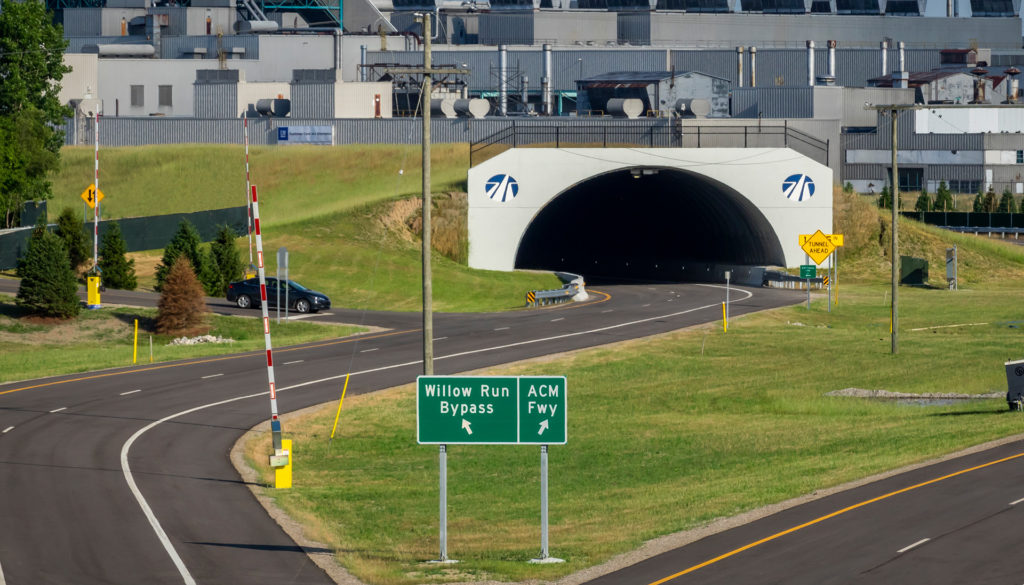
Zone 1: Willow Run Tunnel
The historic 700-foot Willow Run bypass tunnel provides a controlled underground environment for vehicle acoustics testing, lighting system validation, and emergency scenario simulation.

Testing and validation infrastructure for light, medium, and heavy-duty vehicles, automated or human-driven.
16 purpose-built testing environments. Click any zone to explore it.
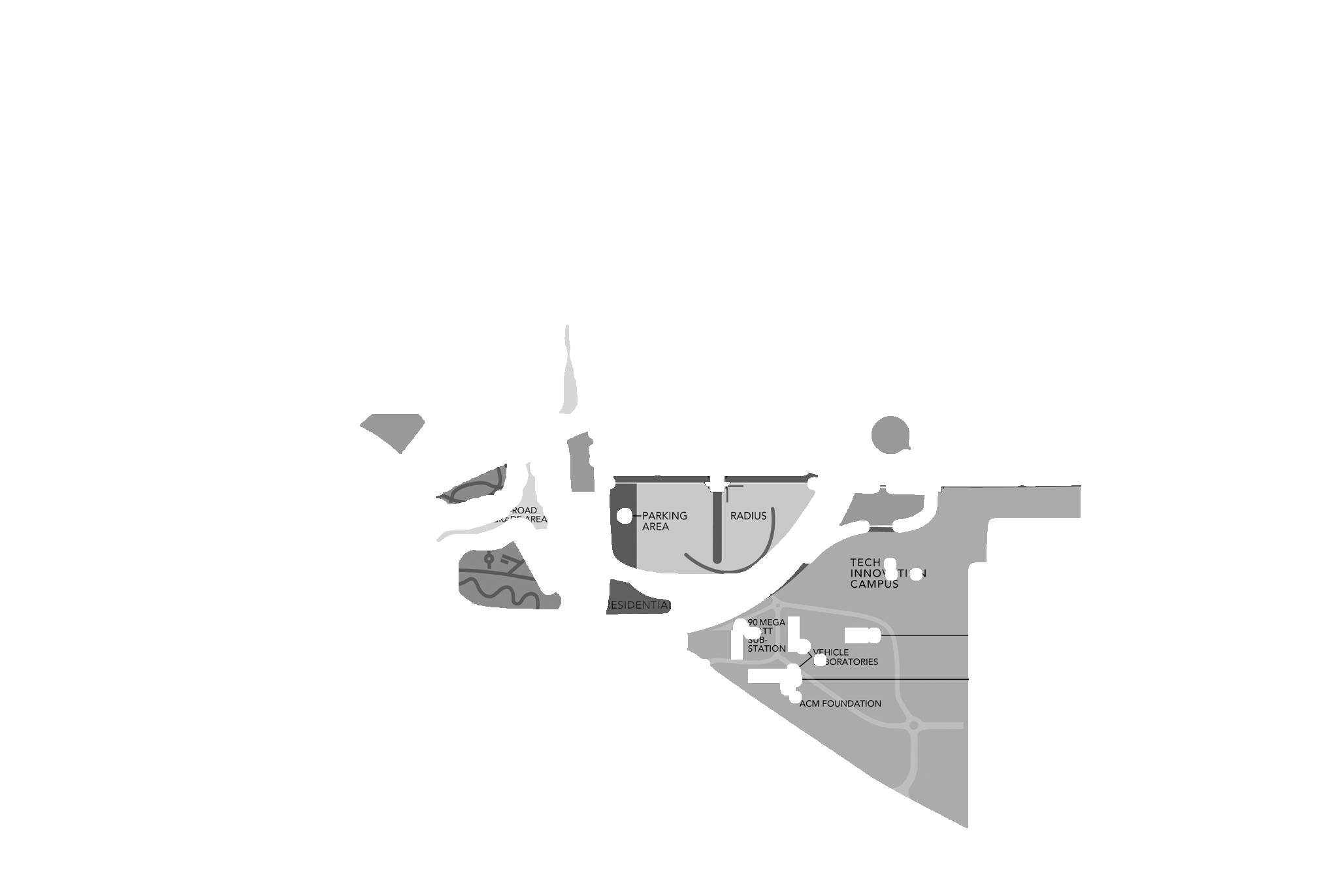
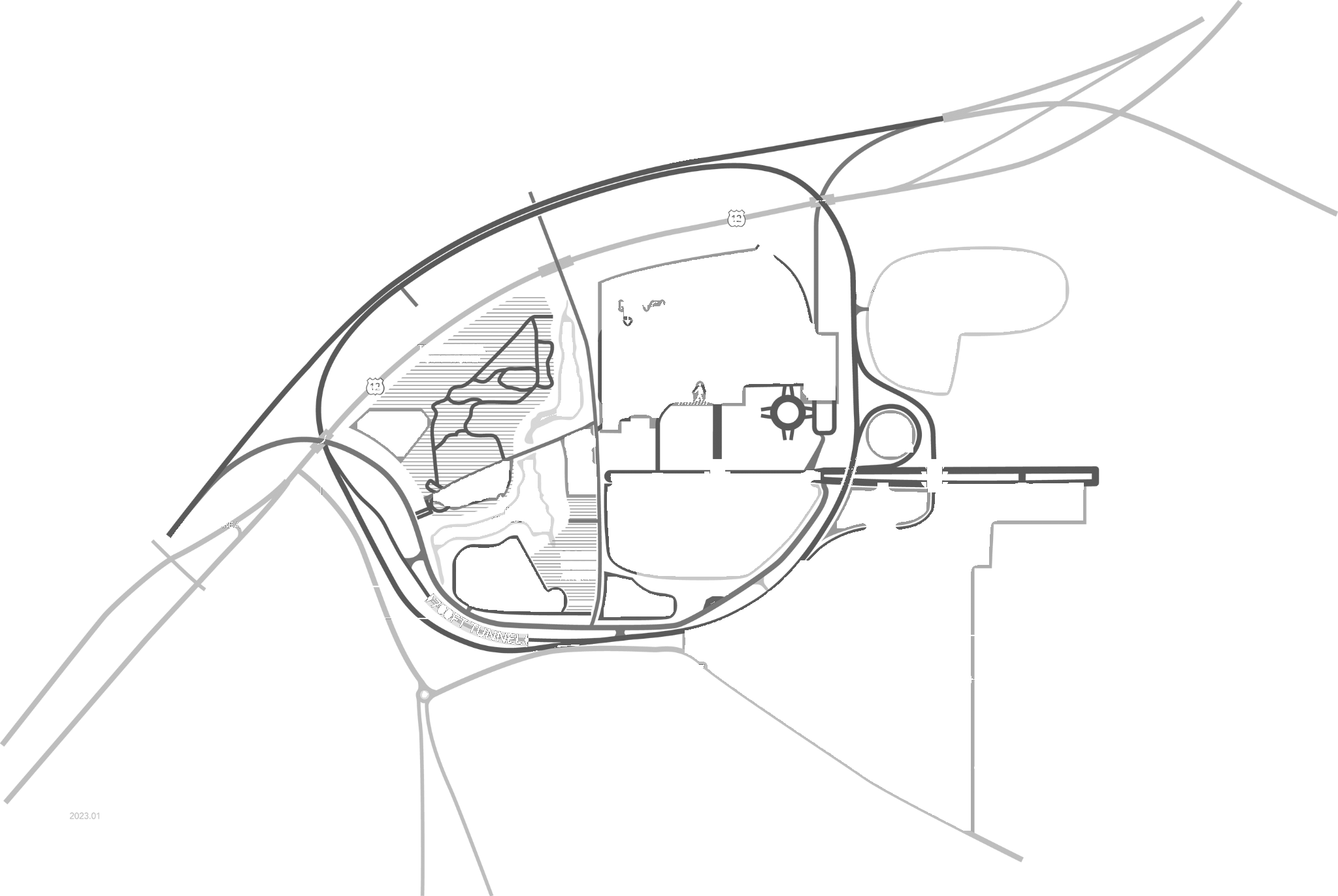
The historic 700-foot Willow Run bypass tunnel provides a controlled underground environment for vehicle acoustics testing, lighting system validation, and emergency scenario simulation.
Multi-surface off-road environment featuring gravel, dirt, and rough-terrain sections for suspension calibration, all-terrain vehicle validation, and drivetrain durability runs.
Named after Michigan's mobility initiative, this multi-lane boulevard replicates real-world urban driving with signalized intersections, lane markings, and mixed traffic scenarios.
A signature ACM structure featuring three stacked driving surfaces for complex interchange merge/diverge testing, multi-level V2I communications, and elevated sensor validation.
High-speed oval loop simulating interstate highway conditions at up to 80+ mph. Used for AV lane-keeping, platooning, emergency maneuver validation, and radar sensor characterization.
Signalized four-lane urban arterial road with synchronized traffic signals, bus stops, and pedestrian crossings to replicate dense city driving and signal phase timing research.
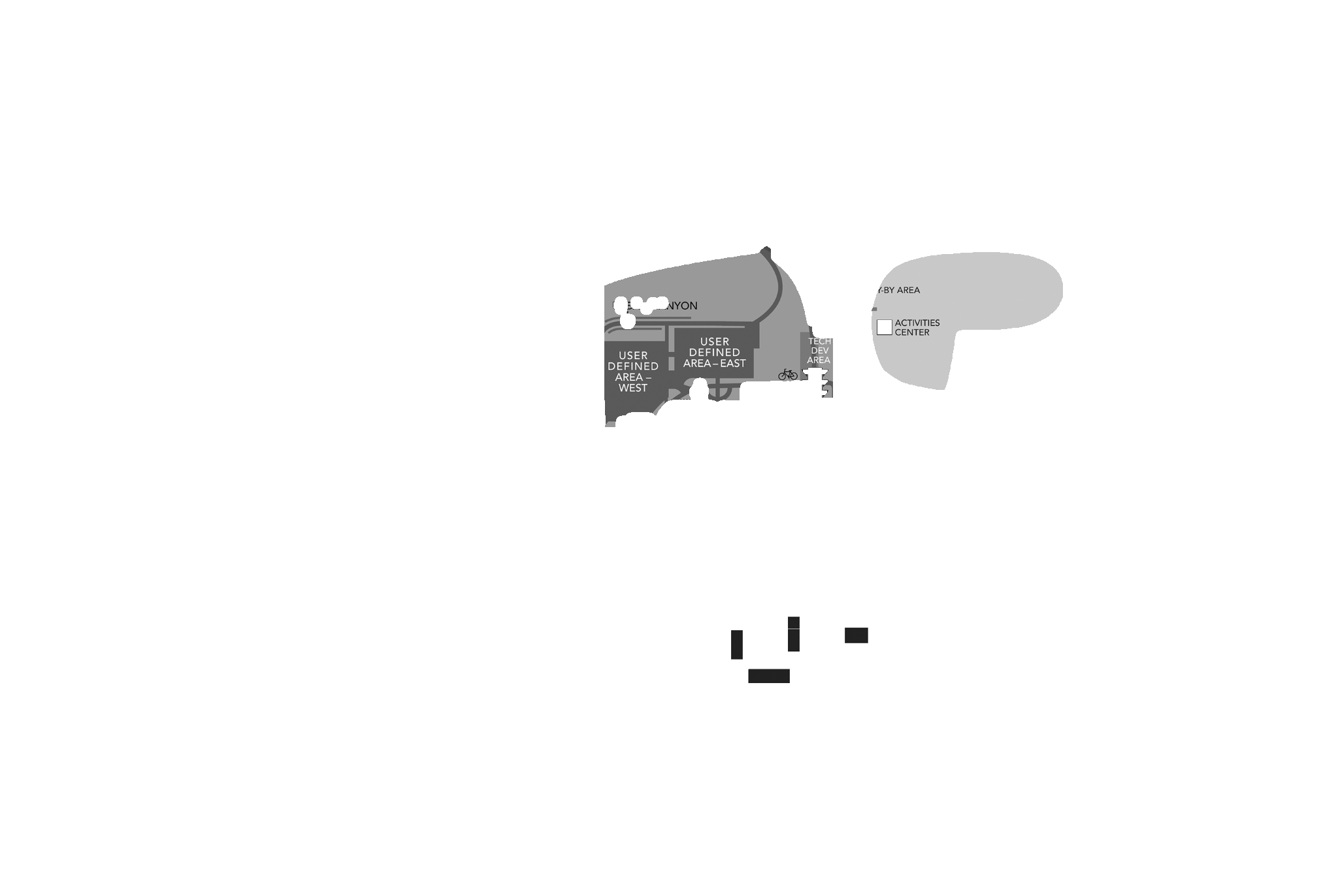
Open-format configurable test pads available in East and West configurations. Partners define their own environments with custom line markings, obstacle layouts, and prop placements.
A complex six-way intersection designed to stress-test AV decision-making, signal compliance, multi-vehicle conflict resolution, and turn behavior prediction algorithms. It offers FMVSS 2-degree grades, ADAS, NCAP, Euro-NCAP, and headlamp testing.
Dedicated innovation zone for infrastructure technology prototyping, including RSU installation, dynamic message signs, connected intersection equipment, and edge computing nodes.
Dedicated multi-use paths and crossings for testing vehicle-to-pedestrian detection, cyclist interaction, VRU safety systems, and NCAP pedestrian scenario protocols at low speed.
Dense urban streetscape with building facades creating GPS-denied zones to evaluate sensor fusion performance, LiDAR accuracy, and dead-reckoning algorithms under GNSS outage.
Full-size structured parking facility for validating autonomous valet systems, parking guidance algorithms, congestion management logic, and tight-space sensor performance.
Primitive two-track trail surfaces replicating rural and wilderness driving for off-road autonomy validation, trail navigation, and rough-terrain AV testing with reduced infrastructure.
State-of-the-art indoor facilities with dynamometers, environmental simulation chambers, and diagnostic bays for hardware-in-the-loop and component-level validation testing.
The ACM Foundation building serves as the campus's administrative and collaboration hub, hosting conferences, media events, partner meetings, and R&D program briefings.
The premier multi-standard EV charging testbed supporting CCS, CHAdeMO, J1772, MCS, and wireless charging validation — a national resource for EV infrastructure certification.
Contact our team to discuss track access, program requirements, and how the ACM Proving Ground can support your development program.
Contact Us