
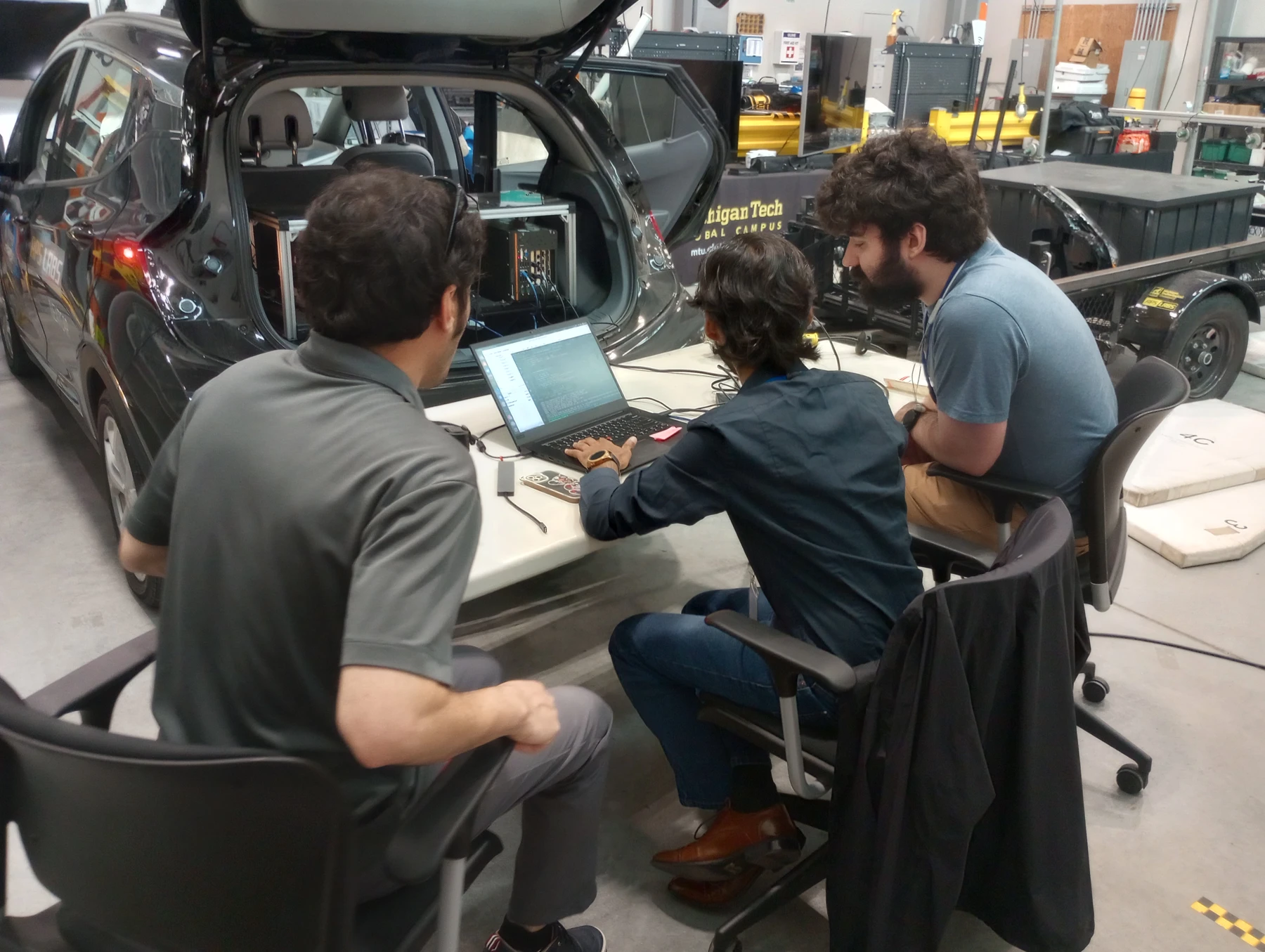
As autonomous vehicle (AV) deployment grows, the industry faces a fundamental challenge: how can manufacturers demonstrate that their systems are safe, reliable and capable of handling the unexpected? Retrospect, a newer ACM customer, though no stranger to ACM, is working to address that challenge by collaborating with AV companies like Waymo, Torc and Kodiak to conduct independent safety testing and validation. In our continuing ACM profile series, we spoke with Retrospect CEO Michael Woon about how Retrospect, with its functional safety approach, fits into the industry.
ACM: What is Retrospect, and what problem are you trying to solve?
Woon: Retrospect is a safety assurance company for autonomous vehicles and other life-critical automated systems, including AI-based systems. We recognized in the late 2010s that autonomous vehicles were facing a major safety challenge: while the technology was developing quickly, the tools and requirements for functional safety were not keeping up.
Retrospect started with our 3rd-party technology that could validate safety in real-time using existing software and data streams. We specialize in ensuring that control systems are stable and safe, evaluating the vehicle's decision-making, and quantifiably determining how sound its assumptions are.
ACM: Why is independent safety validation becoming increasingly important?
Woon: The AV industry is still relatively young and largely unregulated, but that is changing right now. Companies are working to establish safety cases that demonstrate they're ready to deploy, expand into new locations, or make changes to their vehicles. As regulations develop, there will be a greater need to demonstrate that autonomous vehicles meet accepted safety requirements on a faster, almost continuous basis. Independent assessment can provide a layer of trust and transparency that a vehicle has demonstrated the necessary competency. Retrospect is setting the standard for this.
We also expect AV safety assessment to be an ongoing process. Once vehicles are deployed, companies will need to continuously monitor how they're performing in real-world environments.
ACM: Is there any area in particular where this kind of testing could have an immediate safety impact?
Woon: Emergency vehicles are a key focus area. Earlier this year, the National Highway Traffic Safety Administration (NHTSA) called upon AV companies for an answer on how to better handle AVs in emergency situations, noting that trust on the road is “earned, not given.” We've seen cities such as Austin and San Francisco report situations where AVs haven't gotten out of the way of first responders, have blocked emergency vehicles or created additional hazards.
ACM: This must be where the ACM test track comes into play?
Woon: Yes, a facility like ACM can provide an ideal environment to bring emergency vehicles and autonomous vehicles together, run controlled scenarios and produce independent test results. It gives companies something more meaningful than simply saying, "Our vehicle is safe." They can demonstrate that they've been tested against various, realistic scenarios and have met an established level of competency and accepted safety.
ACM: Where do you see the autonomous vehicle industry heading?
Woon: The regulatory environment is evolving quickly. In addition to increased focus around emergency vehicles, we think other areas of focus soon may be driving around school buses and school drop-offs. Customers are telling us they want to stay ahead of standards and regulations, so we are eager to continue partnering with AV companies to create safe scenarios while advancing technology.
ACM: Retrospect’s work fits nicely with ACM’s Safe, Sustainable and Secure mantra.
Woon: ACM and Retrospect are very complementary. We need a place to test, develop and deploy our technology and our customer’s vehicles to simulate real world situations. ACM provides that environment. It gives us an opportunity to work with customers, demonstrate our capabilities and develop independent evidence of autonomous vehicle safety. It also gives us the opportunity to collaborate with other ACM residents and customers, which is a great benefit as well.
ACM: We heard congratulations are in order on a new grant Retrospect received from the Michigan Department of Labor and Economic Opportunity’s Office of Future Mobility and Electrification.
Woon: Yes! Retrospect received a $100,000 test-site grant that we will be using at ACM to test and develop our real-time safety monitoring software for AV validation and fleet management. We’re very grateful to the State of Michigan for supporting this effort and hope additional states and cities can help continue the great work we started here at ACM. There are other collaborative efforts in this area. We’re excited to see what comes out of NHTSA’s support of SAE’s A2SCEND, and we are talking with other AV companies about ways to modernize and digitize regulatory requirements into a software toolchain, so more to come!