
Media Contact: Barbara Fornasiero, EAFocus Communications; barbara@eafocus.com; 248.260.8466
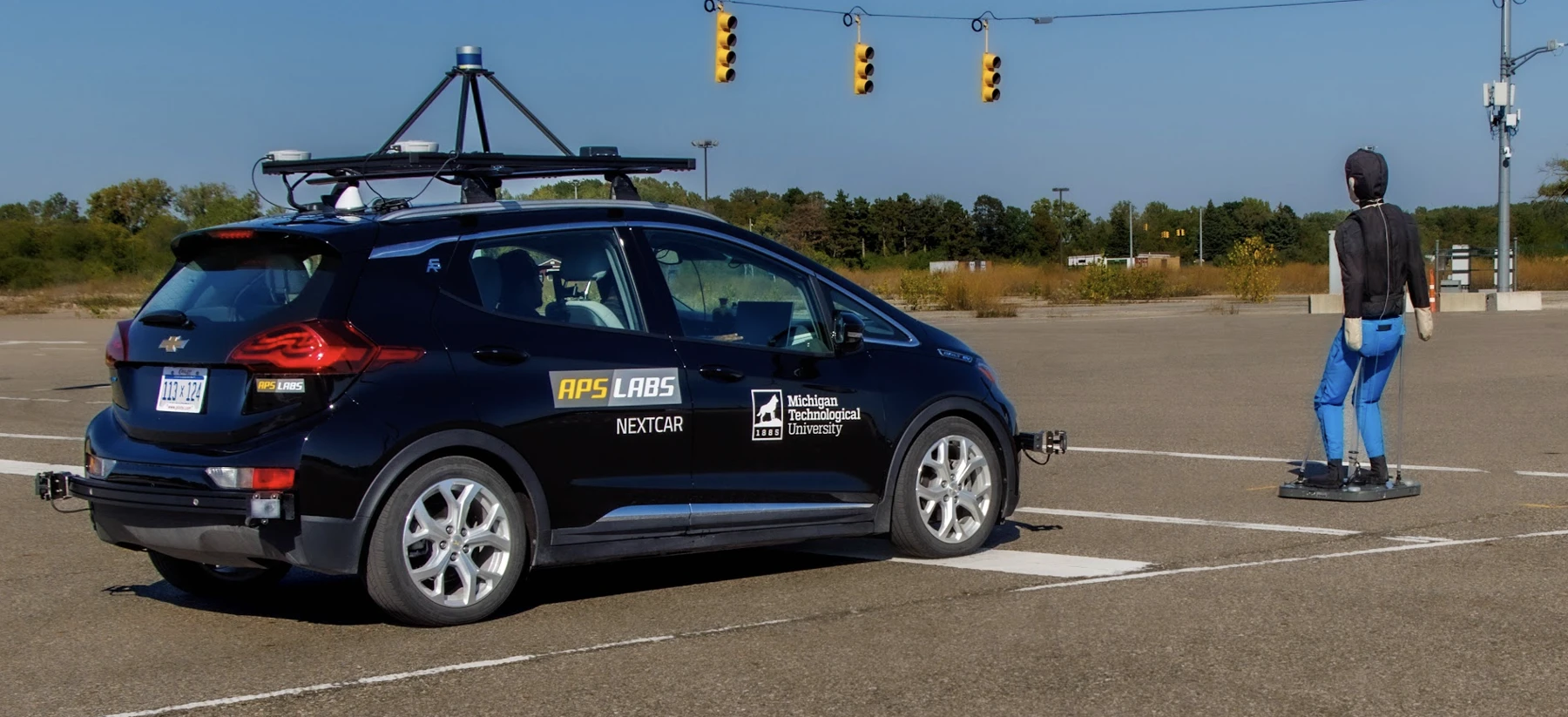
Ypsilanti Township, Mich. ---October 13, 2026 --- The American Center for Mobility (ACM), a technology proving ground at the historic Willow Run site near Ann Arbor, Michigan, that supports the development, validation, and deployment of connected, automated, electric, and cyber-secure technologies across automotive, robotics, and other emerging sectors, has been awarded a research task, Research on Comprehensive Crash Triggers and Preliminary Confirmation Test Methods, under its National Highway Traffic Safety Administration (NHTSA) Indefinite Delivery, Indefinite Quantity (IDIQ) contract, working in partnership with Michigan Technological University’s APS LABS Research Center.
The research on Comprehensive Crash Triggers and Preliminary Confirmation Test Methods will be led by ACM’s Vice President of Research & Development, Sushanta Das, Ph.D., and supported by APS LABS Research Engineer, Mojtaba Bahramgiri, Ph.D. According to Das, the safe and effective deployment of Automated Driving Systems (ADS) hinges on their ability to detect, log, and respond to all collision events to satisfy legal and safety requirements. Current collision detection may rely on airbag deployment or high-G force thresholds, which may fail to capture low-energy impacts.
“The purpose of the NHTSA research task award is to identify gaps in traditional collision detection methods to identify low-energy collisions, and to identify, evaluate, and formulate methods to validate new approaches capable of detecting all contact events,” Das said.
ACM and APS LABS will provide NHTSA with a comprehensive assessment of the end-to-end collision detection pipeline, spanning physical sensing, AI/ML algorithmic fusion, sub-threshold triggering logic, and data logging. It specifically addresses the challenges of detecting impacts involving:
- Vulnerable Road Users (VRUs) such as pedestrians and cyclists.
- Low-speed collisions (e.g., "fender benders" in parking or heavy traffic).
- Towed units (e.g., articulated trailers, towed vehicles), regardless of whether the trailer is "smart" (instrumented) or traditional (non-instrumented).
“Collaboration on the NHTSA research task award builds on the ACM/MTU partnership and prior joint research in safe mobility for ADS-to-AV systems, including the development of open-architecture, fully automated connected and automated vehicles,” Jeff Naber of the APS LABS Research Center, who serves as the MTU/ACM partnership coordinator for mobility, said. “This is an exciting step forward in our research partnership on safety advances in mobility.”
About Advanced Power Systems Research Center (APS LABS) at Michigan Technological University
The Advanced Power Systems Research Center (APS LABS) at Michigan Technological University is a multidisciplinary research center dedicated to advancing mobility, power, and energy. Serving as the engineering services provider for the American Center for Mobility through ACM Powered by MTU, APS LABS delivers on-site engineering, testing, and research collaboration at the historic Willow Run site. For additional information, visit the website.
About the American Center for Mobility
The American Center for Mobility is a nonprofit mobility and technology campus located at historic Willow Run in Ypsilanti Township, Michigan. ACM provides infrastructure, testing environments, event space, and convening power to help organizations advance safe, sustainable, and secure technologies across transportation and related industries. Learn more at acmwillowrun.org.
###